Biomaterials for engineering disease microenvironments
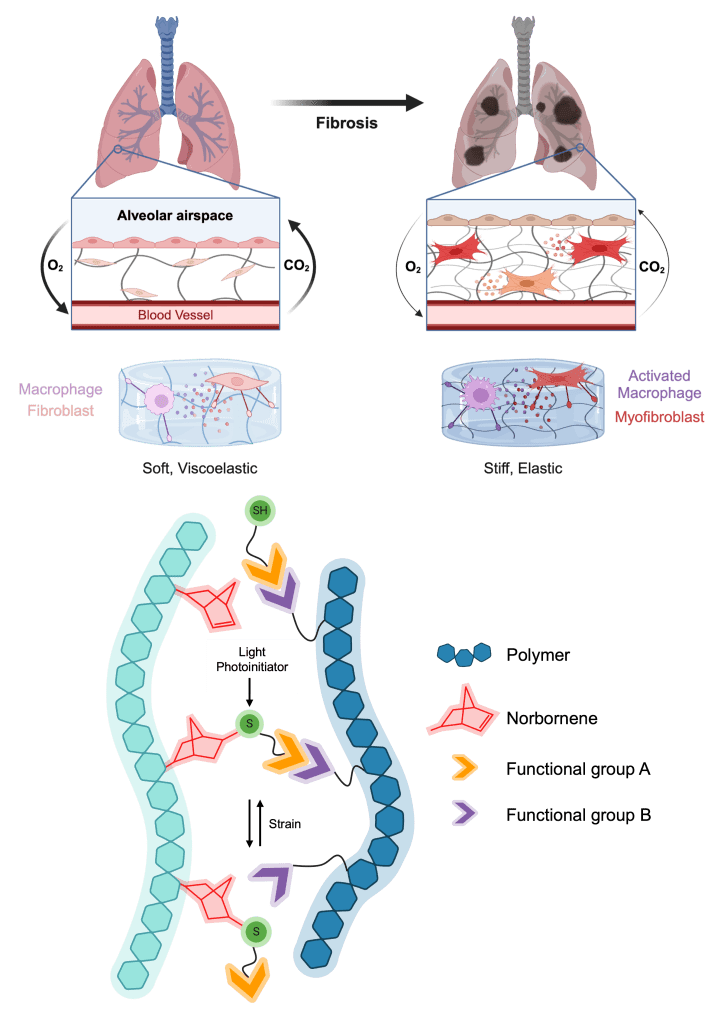
Understanding how dynamic mechanical cues in development and disease progression are sensed and integrated to direct cell behaviors (e.g., stromal-immune cell crosstalk) in vivo would be tremendously beneficial for both improving fundamental understanding of disease and for developing better therapeutics. Toward this goal, we are pioneering the development of new classes of modular hydrogels that exhibit spatiotemporally heterogeneous mechanics (stiffness, viscoelasticity) as 3D cell culture models of normal and diseased tissues.
Biomaterials for engineering tissues
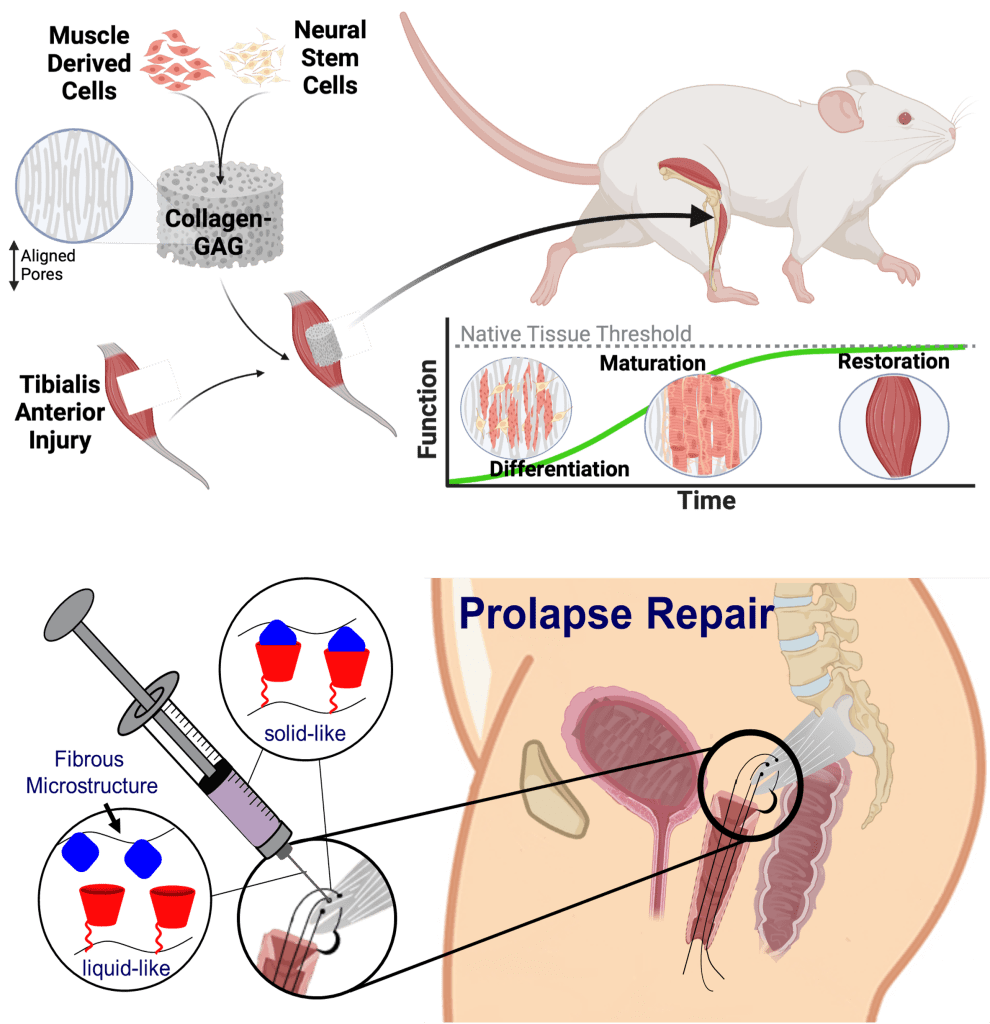
Our tissue engineering efforts focus on two distinct challenges: 1) the traumatic destruction of muscle mass/function through volumetric muscle loss, and 2) pelvic organ prolapse, which affects approximately 50% of women who have given birth. We address these challenges through a range of approaches combining novel biomaterial technologies (e.g., conductive scaffolds, injectable nano/microfibrous materials), animal models, and clinical collaborations.
Funding
We are grateful for past and present funding from the following sources:

 Caliari Lab